
Great Pyrenees vs Golden Retriever: The Complete Guide


Choosing between a Great Pyrenees vs Golden Retriever can feel like standing at a crossroads with two equally charming paths ahead. Both breeds capture hearts with their stunning coats and loving personalities, yet they’re fundamentally different dogs designed for distinct purposes. Whether you’re a first-time dog owner or expanding your pack, understanding these differences isn’t just helpful it’s essential for a harmonious match.
I’ll never forget visiting my neighbor’s home last summer. Their Great Pyrenees, Luna, lay majestically on the porch like a fluffy white sentinel, calmly observing the world with quiet confidence. Just a few houses down, my friend’s Golden Retriever, Bailey, bounded toward me with a tennis ball, tail wagging so hard I thought she might take flight. That moment perfectly captured the essence of the Great Pyrenees vs Golden Retriever debate: one breed is the calm guardian, the other is your enthusiastic playmate.
Understanding the Great Pyrenees vs Golden Retriever Size Difference
When comparing Great Pyrenees vs Golden Retriever, the most striking difference is their physical stature. The Great Pyrenees is classified as a giant breed, while Golden Retrievers fall into the medium-to-large category.
Male Great Pyrenees stand between 27-32 inches tall at the shoulder and weigh a substantial 100-160 pounds. Females are slightly smaller at 25-29 inches and 85-115 pounds. In contrast, Golden Retrievers are considerably more compact. Males reach 23-24 inches in height and weigh 65-75 pounds, while females measure 21.5-22.5 inches and weigh 55-65 pounds.
According to AKC breed standards, the largest Great Pyrenees can weigh twice as much as the largest Golden Retriever. This size differential impacts everything from housing requirements to food costs and exercise needs.
Physical Characteristics Comparison
| Feature | Great Pyrenees | Golden Retriever |
|---|---|---|
| Height (Male) | 27-32 inches | 23-24 inches |
| Weight (Male) | 100-160 lbs | 65-75 lbs |
| Height (Female) | 25-29 inches | 21.5-22.5 inches |
| Weight (Female) | 85-115 lbs | 55-65 lbs |
| Coat Color | White (sometimes with markings) | Light to dark golden |
| Coat Type | Thick, weather-resistant double coat | Dense, water-repellent double coat |
| Lifespan | 10-12 years | 10-12 years |
Coat and Grooming: Great Pyrenees vs Golden Retriever
Both breeds in the Great Pyrenees vs Golden Retriever comparison feature beautiful double coats, but their maintenance requirements differ significantly.
The Great Pyrenees sports a thick, coarse outer coat that’s predominantly white, occasionally featuring gray, badger, or tan markings on the ears and body. Their coat is self-cleaning to some degree, requiring brushing 1-2 times weekly under normal circumstances. However, during seasonal shedding, daily brushing becomes necessary.
Golden Retrievers showcase their signature golden coat ranging from light cream to deep red-gold. Their softer coat includes distinctive feathering on the chest, legs, and tail. Goldens require more consistent grooming daily brushing during spring and fall shedding seasons, and 3-4 times weekly during other periods.
Both breeds are heavy shedders, so if you’re considering the Great Pyrenees vs Golden Retriever choice, prepare for fur management regardless of your decision. For more detailed grooming guidance, check out our Golden retriever Guides for comprehensive care tips.
Temperament and Personality: The Heart of the Great Pyrenees vs Golden Retriever Debate
Understanding temperament differences is crucial when deciding between Great Pyrenees vs Golden Retriever breeds for your family.
Great Pyrenees: The Gentle Guardian
Great Pyrenees were originally bred as livestock guardian dogs in the Pyrenees Mountains between France and Spain. This heritage shapes their independent, protective nature. They’re calm, patient, and naturally vigilant qualities that made them excellent at protecting sheep from predators like wolves and bears.
These gentle giants are affectionate with their families but maintain a reserved demeanor with strangers. They’re not overly demonstrative, preferring to show love through quiet companionship and watchful protection. Great Pyrenees dogs are serious about their guardian role and will bark to alert you of anything unusual a trait that neighbors in close quarters might find challenging.
Golden Retriever: The Social Butterfly
Golden Retrievers were developed in Scotland during the 1800s as hunting companions, specifically bred to retrieve waterfowl for hunters. This working background created dogs that are eager to please, highly trainable, and constantly seeking human interaction.
Goldens are the quintessential family dogs friendly, outgoing, and playful. They love everyone they meet, making them poor guard dogs but excellent therapy and service animals. According to 2024 AKC statistics, Golden Retrievers rank as the third most popular dog breed in America, beloved for their adaptability and gentle nature with children.
Training and Intelligence: Great Pyrenees vs Golden Retriever
The Great Pyrenees vs Golden Retriever comparison reveals stark differences in trainability.
Golden Retrievers are highly intelligent and motivated by praise, making them remarkably easy to train. They excel in obedience competitions, service work, and various dog sports. Their desire to please their owners means they respond enthusiastically to positive reinforcement training methods.
Great Pyrenees, while equally intelligent, are independent thinkers bred to make decisions without human guidance. They may not see the point in repetitive commands like “sit” or “heel” and can appear stubborn during training sessions. As one expert notes, “Great Pyrenees trained with patience and consistent positive reinforcement methods can learn, but they’re genetically wired differently from breeds bred to work closely with humans.”
Successful Great Pyrenees training requires creativity, patience, and understanding that these dogs were designed to work independently for centuries. They respond better to training that feels purposeful rather than arbitrary.
Exercise and Energy Levels: Great Pyrenees vs Golden Retriever
When comparing Great Pyrenees vs Golden Retriever exercise requirements, the differences are substantial.
Golden Retrievers are high-energy dogs requiring 60-90 minutes of daily exercise. They thrive on activities like swimming, hiking, playing fetch, and running. Without adequate physical and mental stimulation, Goldens can develop destructive behaviors born from boredom.
Great Pyrenees have much lower energy levels, preferring to conserve their strength for when it’s genuinely needed. They don’t require intensive exercise routines moderate daily walks and time to patrol their territory satisfy their needs. However, they do need outdoor access for mental stimulation, as watching their surroundings is part of their natural behavior.
For active families who jog, hike, or enjoy outdoor adventures, the Golden Retriever fits seamlessly. For those seeking a calmer companion who enjoys leisurely walks, the Great Pyrenees is ideal.
Health Considerations: Great Pyrenees vs Golden Retriever
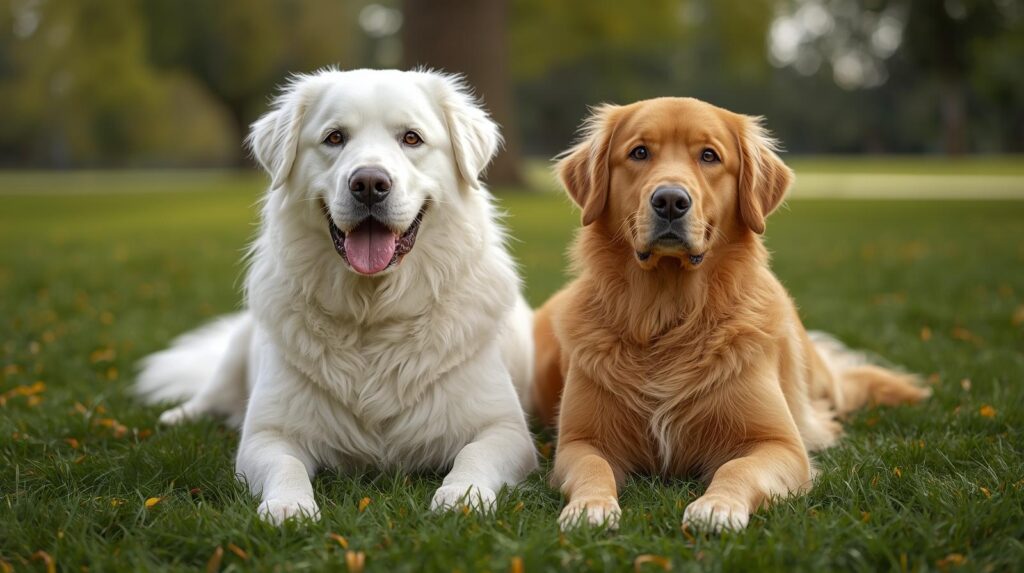
Both breeds in the Great Pyrenees vs Golden Retriever comparison share similar lifespans of 10-12 years, but they’re prone to different health issues.
Great Pyrenees Health Concerns
- Hip and Elbow Dysplasia: Joint development issues common in giant breeds
- Bloat (GDV): Life-threatening condition where the stomach twists
- Bone Cancer (Osteosarcoma): Higher risk in large breeds
- Addison’s Disease: Underactive adrenal glands
- Patellar Luxation: Kneecap displacement
Golden Retriever Health Concerns
- Hip and Elbow Dysplasia: Similar to Pyrenees but less severe
- Cancer: Unfortunately common in the breed
- Heart Disease: Requires regular cardiac monitoring
- Eye Conditions: Including cataracts and progressive retinal atrophy
- Obesity: Tendency to overeat if not monitored
Preventive care through regular veterinary checkups, proper nutrition, and appropriate exercise significantly impacts both breeds’ longevity.
Living Situations: Which Breed Fits Your Lifestyle?
The Great Pyrenees vs Golden Retriever decision often comes down to your living environment and lifestyle.
Great Pyrenees Living Requirements
Great Pyrenees need space lots of it. They’re not suited for apartment living due to their size, tendency to bark, and desire to patrol territory. A large, securely fenced yard is ideal. They prefer cooler climates and will happily spend hours outside in cold weather, even snow.
These dogs are nocturnal by nature, often more active at night when they historically guarded flocks. They’re calm indoors but need the freedom to move around without constantly bumping into furniture.
Golden Retriever Living Requirements
Golden Retrievers are more adaptable, though they still need adequate space for their size. They can adjust to various living situations as long as their exercise needs are met. Unlike the Pyrenees, Goldens strongly prefer being indoors with their families they don’t like being alone and can develop separation anxiety.
They adapt well to different climates but need air conditioning in hot weather and shelter in extreme cold. Their social nature makes them excellent for families with children, frequent visitors, or multiple pets.
Cost of Ownership:
Financial considerations in the Great Pyrenees vs Golden Retriever comparison extend beyond the initial purchase price.
Both breeds typically cost between $1,000-$2,500 from reputable breeders. However, ongoing expenses differ significantly:
Food Costs: Great Pyrenees consume substantially more food due to their size expect to spend $80-120 monthly versus $50-75 for Golden Retrievers.
Grooming: Professional grooming runs $60-100 per session for both breeds, needed every 6-8 weeks.
Healthcare: Both breeds require similar preventive care, but Great Pyrenees may face higher medication costs due to their size.
Training: Golden Retrievers often need less professional training investment due to their trainability.
Popularity and Recognition
In 2024, Golden Retrievers maintained their position as America’s third most popular dog breed according to AKC registration statistics. The breed has consistently ranked in the top three for decades, appreciated for their versatility and family-friendly nature.
Great Pyrenees rank lower in popularity but maintain a dedicated following, particularly among rural families and those seeking livestock guardians. Their specialized role means they’re not as commonly seen in urban or suburban settings.
Making Your Choice: Great Pyrenees vs Golden Retriever
After examining the Great Pyrenees vs Golden Retriever from every angle, the right choice depends on honest self-assessment:
Choose a Golden Retriever if you:
- Want an energetic, playful companion
- Enjoy outdoor activities and exercise
- Prefer a highly trainable, eager-to-please dog
- Live in various housing situations
- Desire a social dog that loves everyone
Choose a Great Pyrenees if you:
- Have a large property with secure fencing
- Prefer a calm, independent dog
- Need a protective guardian for your family or livestock
- Live in a cooler climate
- Appreciate a more reserved, dignified companion
- Have patience for independent thinking during training
From my personal experience observing both breeds in action, I’ve learned that the Great Pyrenees vs Golden Retriever decision isn’t about which breed is better it’s about which breed better matches your lifestyle, expectations, and living situation. Both are exceptional dogs in their own right.
Conclusion: Finding Your Perfect Match
The Great Pyrenees vs Golden Retriever comparison reveals two remarkable breeds with distinct purposes and personalities. Golden Retrievers bring boundless enthusiasm, unwavering loyalty, and infectious joy to active families. Great Pyrenees offer calm protection, independent companionship, and majestic presence to those with space and patience.
Understanding the fundamental differences between Great Pyrenees vs Golden Retriever helps ensure you choose a companion who’ll thrive in your home while meeting your expectations. Both breeds require commitment, love, and proper care rewards that come back tenfold in companionship and devotion.
Frequently Asked Questions
Q: Can Great Pyrenees and Golden Retrievers live together?
Yes, Great Pyrenees and Golden Retrievers can coexist peacefully with proper introductions and socialization. The Pyrenees’ calm nature typically complements the Golden’s playful energy. However, their different exercise and space needs require consideration.
Q: Which breed is better for first-time dog owners?
Golden Retrievers are generally better for first-time owners due to their trainability and eagerness to please. Great Pyrenees require experienced handling to manage their independent nature and guardian instincts effectively.
Q: Do Great Pyrenees shed more than Golden Retrievers?
Both breeds are heavy shedders with double coats. Great Pyrenees have coarser, self-cleaning fur requiring less frequent grooming, while Golden Retrievers shed more consistently year-round and need more regular brushing.
Q: Which breed is more protective of children?
Great Pyrenees are naturally more protective due to their guardian instincts, though both breeds are gentle with children. Golden Retrievers show affection through playfulness, while Pyrenees protect through watchful vigilance.
Q: What are the biggest challenges of owning a Great Pyrenees compared to a Golden Retriever?
The main challenges include managing the Pyrenees’ independent nature during training, their tendency to bark frequently, need for extensive space, and nocturnal activity patterns all factors rarely seen in the more adaptable, people-pleasing Golden Retriever.
After exploring every facet of the Great Pyrenees vs Golden Retriever comparison, which breed characteristics align most closely with what you’re truly looking for in a canine companion?