
How to Train a Golden Retriever: Step-by-Step Guide

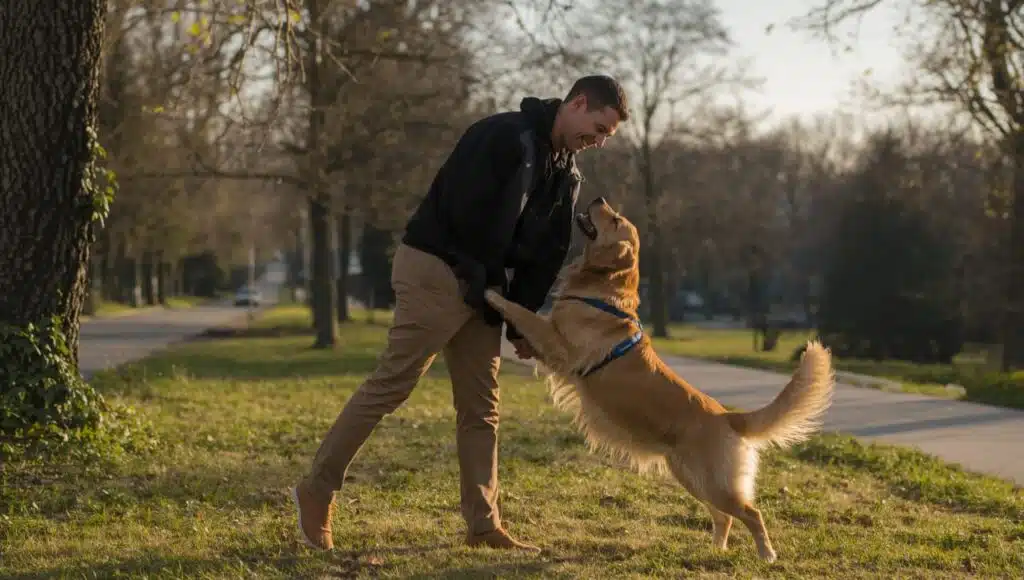
The first time I tried to teach a Golden Retriever puppy to sit, he responded by flopping onto his back and chewing my shoelace instead. If you’ve ever wondered how to train a Golden Retriever without losing your patience or your shoes you’re in good company. Golden Retrievers are famously biddable, but “easy to train” doesn’t mean “trains itself.” It means the breed responds beautifully once you know how to train a Golden Retriever the right way.
This guide walks through exactly how to train a Golden Retriever from the eight-week mark through adulthood, backed by current data, veterinary behavior research, and a few lessons I learned the hard way.
Why Learning How to Train a Golden Retriever Pays Off
Golden Retrievers remain one of the most sought-after family dogs in the country. According to Forbes Advisor’s 2026 breed data, golden retrievers ranked as the fourth most popular larger dog breed nationally, and industry trackers note they consistently place in the top five on the AKC‘s annual list, which releases its ranking of the most popular dog breeds each year based on national registration statistics. Their popularity isn’t an accident the breed is widely recognized for its intelligence, loyalty, and gentle disposition, traits that make it friendly with people of all ages.
That trainability is exactly why so many first-time owners search for how to train a Golden Retriever before they even bring the puppy home. The breed wants a job. Give it structure, and it thrives. Skip the structure, and you’ll end up with a 70-pound dog who thinks the couch is a chew toy.
Golden Retriever Guides: A Quick Look at the Learning Curve
If you’ve read our Golden Retriever Guides on breed temperament, you already know Goldens rank near the top for obedience-related intelligence among working and sporting breeds. That’s a major head start when it comes to how to train a Golden Retriever compared to more independent-minded breeds.
| Age Range | Focus Area | Typical Session Length | What to Expect |
|---|---|---|---|
| 8–12 weeks | Name recognition, crate training, potty routine | 5 minutes | Short attention span, high distraction |
| 3–6 months | Sit, stay, come, loose-leash walking | 10 minutes | Rapid learning, occasional regression |
| 6–12 months | Recall reliability, impulse control, socialization | 15 minutes | Adolescent testing of boundaries |
| 1–2 years | Advanced obedience, off-leash reliability | 15–20 minutes | Consistent, confident responses |
This timeline is a helpful benchmark for anyone mapping out how to train a Golden Retriever season by season rather than expecting overnight results.
Step 1: Start Early With Foundational Skills
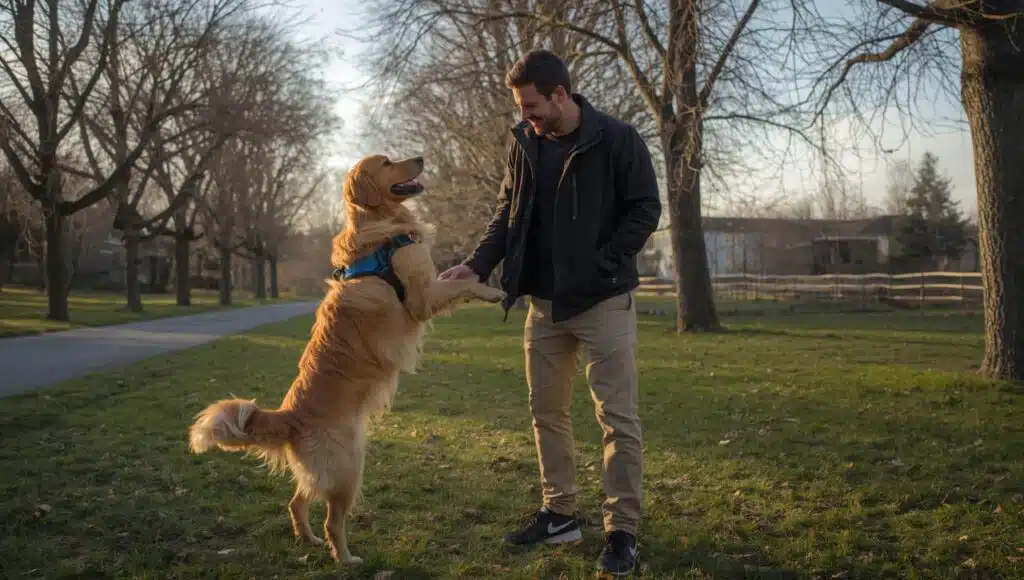
The single biggest factor in how to train a Golden Retriever successfully is starting the moment the puppy comes home not waiting for a formal class. Name recognition, crate comfort, and a consistent potty schedule form the foundation everything else builds on. Puppies this young have short attention spans, so five-minute sessions, several times a day, work better than one long lesson.
I made the mistake of waiting until my Golden was four months old to start “real” training. In hindsight, those first eight weeks were prime learning time I wasted. Don’t repeat my error early handling is a core piece of how to train a Golden Retriever puppy without fighting bad habits later.
Step 2: Lean on Positive Reinforcement, Not Correction
If there’s one principle that should anchor how to train a Golden Retriever, it’s positive reinforcement. Recent behavioral science backs this up clearly: a University of Lincoln study published in Frontiers in Veterinary Science found that positive reinforcement training was more effective at general obedience training than training with or without an electronic collar. Separately, researchers observed that dogs trained with aversive methods were fifteen times more likely to show stress symptoms than dogs trained with rewards, and as many as 65% of dogs in a negative-reinforcement class displayed at least one stress behavior, compared with only 8% in the positive-reinforcement class.
For a breed as food- and praise-motivated as the Golden Retriever, this isn’t just an ethical preference it’s the most effective method available. Reward-marking with a clicker or a simple “yes,” followed immediately by a treat, is central to how to train a Golden Retriever to repeat a behavior on command.
Step 3: Build Basic Obedience Commands in Order
Once the groundwork is set, how to train a Golden Retriever moves into structured commands. Teach them in this sequence for best results:
Sit and Stay Come First
These two commands establish impulse control and are the base for almost everything else, including calm greetings and safe leash walking.
Come (Recall) Is Non-Negotiable
Recall is arguably the most important command in how to train a Golden Retriever for real-world safety. Practice it in low-distraction environments first, then gradually add distractions like other dogs or squirrels.
Loose-Leash Walking Prevents a Lifetime of Pulling
Goldens are strong, enthusiastic walkers. Teaching loose-leash manners early rather than correcting pulling later is a much easier path to a well-mannered adult dog.
Step 4: Socialize as Much as You Train
Any complete answer to how to train a Golden Retriever has to include socialization, not just commands. Exposing puppies to new people, dogs, surfaces, and sounds between 8 and 16 weeks shapes long-term temperament far more than obedience drills alone. A well-socialized Golden is calmer at the vet, friendlier with strangers, and easier to manage in public.
Common Mistakes People Make When Training a Golden Retriever
Even with a naturally cooperative breed, owners often stumble in the same places:
- Training only in the living room, then expecting perfect behavior at the park
- Using long, boring sessions instead of short, high-energy ones
- Inconsistent household rules one person allows the couch, another doesn’t
- Skipping the “adolescent” phase (6–12 months), when regression is common
- Assuming a smart breed means a self-taught breed
Avoiding these five mistakes solves most of the friction people run into when figuring out how to train a Golden Retriever at home.
How Long Does It Take to Train a Golden Retriever?
Most Golden Retrievers grasp basic obedience sit, stay, come, and leash manners within 8 to 12 weeks of consistent daily practice. Full reliability, including off-leash recall in distracting environments, typically takes 12 to 18 months, since adolescence (roughly 6 to 12 months) often brings a temporary regression. Anyone researching how to train a Golden Retriever should expect steady progress with occasional setbacks, not a straight line.
Owner demand for this kind of trainable, family-friendly dog isn’t slowing down. The APPA’s 2025 National Pet Owners Survey found 95 million U.S. households now own at least one pet, up from 82 million in 2023, and Gen Z has become the fastest-growing group of new pet owners, frequently researching breeds through social platforms before adopting. That growing wave of new, often first-time owners is exactly why clear guidance on how to train a Golden Retriever matters more than ever.
It’s also worth setting realistic expectations before you start. Training timelines vary by individual dog, household consistency, and how much daily practice actually happens. A puppy raised in a busy home with multiple family members handling commands differently will usually progress more slowly than one trained by a single, consistent handler. If you’re serious about how to train a Golden Retriever on a predictable schedule, get everyone in the household using the same words, hand signals, and rewards from day one. That single change often shaves weeks off the learning curve.
Final Thoughts on How to Train a Golden Retriever
Knowing how to train a Golden Retriever comes down to four things: start early, reward generously, build commands in order, and socialize constantly. The breed does the rest Goldens genuinely want to please their people, which is part of why they remain such popular family companions. Stick with short, consistent sessions, and don’t panic during the adolescent wobble. It passes.
Frequently Asked Questions
Is It Hard to Train a Golden Retriever?
No. Golden Retrievers are widely regarded as one of the easiest dog breeds to train because they are intelligent, eager to please, and highly responsive to positive reinforcement. Consistent practice and patience are the keys to success.
What Is the Best Age to Start Training a Golden Retriever?
The ideal time to begin training is around 8 weeks of age. Start with simple routines such as name recognition, potty training, socialization, and crate training. Basic obedience commands like sit, stay, and come can be introduced by 10 to 12 weeks.
How Many Times a Day Should I Train My Golden Retriever Puppy?
Short training sessions of 5 to 10 minutes, repeated two to three times per day, are more effective than a single long session. Frequent practice helps puppies stay focused and retain new commands.
Do Golden Retrievers Respond Better to Treats or Praise?
Most Golden Retrievers respond well to a combination of treats and verbal praise. Food rewards are especially effective during the early stages of training, while praise, toys, and affection help reinforce good behavior over time.
Can an Older Golden Retriever Still Learn New Commands?
Absolutely. Older Golden Retrievers are fully capable of learning new commands and behaviors with consistent training and positive reinforcement. While they may take slightly longer than puppies to learn new skills, regular practice and patience can produce excellent results.