
Labrador vs Golden Retriever: Complete Breed Comparison

Introduction
Choosing the right family dog can be a tough decision, and the Labrador vs Golden Retriever debate is one of the most common questions among dog lovers. Both breeds are incredibly popular, known for their friendly personalities, intelligence, and athletic builds. Yet, a closer look at the Labrador vs Golden Retriever comparison reveals key differences that could influence your choice. Understanding these distinctions will help you find the perfect furry companion for your home and lifestyle.
According to the American Kennel Club (AKC), Labrador Retrievers have topped the charts as the most popular breed since 1991, while Golden Retrievers currently hold the fourth spot. Their enduring popularity reflects their remarkable traits, but popularity alone doesn’t make one breed better than the other. The right choice depends on your family dynamics, activity level, and expectations for your dog.
In this 2026 guide, we’ll provide a thorough Labrador vs Golden Retriever comparison, covering physical traits, temperament, health considerations, grooming needs, and more. Whether you’re a first-time dog owner or a seasoned enthusiast, this article will give you the insights needed to confidently decide which breed best fits your lifestyle.
Understanding the Origins: History and Heritage
The Labrador Retriever’s Canadian Roots
The Labrador Retriever originated on the island of Newfoundland in the eastern province of Canada, Labrador. These dogs were originally bred as working companions for fishermen, helping them retrieve nets and lost lines from frigid waters. The breed’s resilience and water-resistant coat made them ideal for harsh maritime conditions.
The Golden Retriever’s Scottish Beginning
The Golden Retriever vs Labrador Retriever story takes a different turn north of the border. The Golden Retriever originated in 17th-century Scotland, bred by Lord Tweedmouth, who crossed a Yellow Retriever with a Tweed Water Spaniel to create a breed suited to Scottish Highland terrain. While their origins differ, both breeds share a common ancestry in the St. John’s water dog, an extinct breed that passed down their retrieving instincts.
Understanding the Labrador Retriever vs Golden Retriever origins helps explain their shared traits: both excel at water work, possess webbed feet, and carry that innate desire to retrieve. Yet their different breeding purposes influenced subtle personality differences that persist today.
Physical Appearance: Size, Coat, and Coloring
Size Comparison
When examining Labrador vs Golden Retriever dimensions, the breeds are surprisingly similar. Golden Retrievers weigh 65 to 75 pounds for males and 55 to 65 pounds for females, while Labrador Retrievers weigh 65 to 80 pounds for males and 55 to 70 pounds for females. Both breeds reach similar mature heights: Goldens reach 21.5 to 24 inches, while Labs are 21.5 to 24.5 inches tall.
However, Labs tend to have a stockier, more muscular build, while Goldens appear more elegant and refined a distinction that becomes clearer when you see them side by side.
| Aspect | Golden Retriever | Labrador Retriever |
|---|---|---|
| Coat Length | Long, feathered coat adds elegance | Short, dense coat for easy maintenance |
| Shedding Pattern | Continuous shedding with seasonal peaks | Continuous shedding with seasonal peaks |
| Brushing Frequency | 3–4 times per week to prevent mats | 1–2 times per week to control loose hair |
| Primary Colors | Cream to deep gold | Black, yellow, chocolate |
| Grooming Intensity | High — requires regular brushing and occasional trims | Moderate — simpler maintenance, occasional baths |
Coat Type and Maintenance
One of the most striking differences in the Labrador vs Golden Retriever comparison is their coats. Golden Retrievers have thick, water-repellant double coats that they shed once or twice a year, with additional moderate continuous shedding. Labs have a short, dense coat that gives a fairly hard feeling to the hand, with a softer, weather-resistant undercoat.
This distinction directly impacts grooming schedules. Golden Retrievers need more frequent brushing (3–4 times per week) to avoid matting, while Labs can get by with brushing just 1–2 times per week.
Color Variations
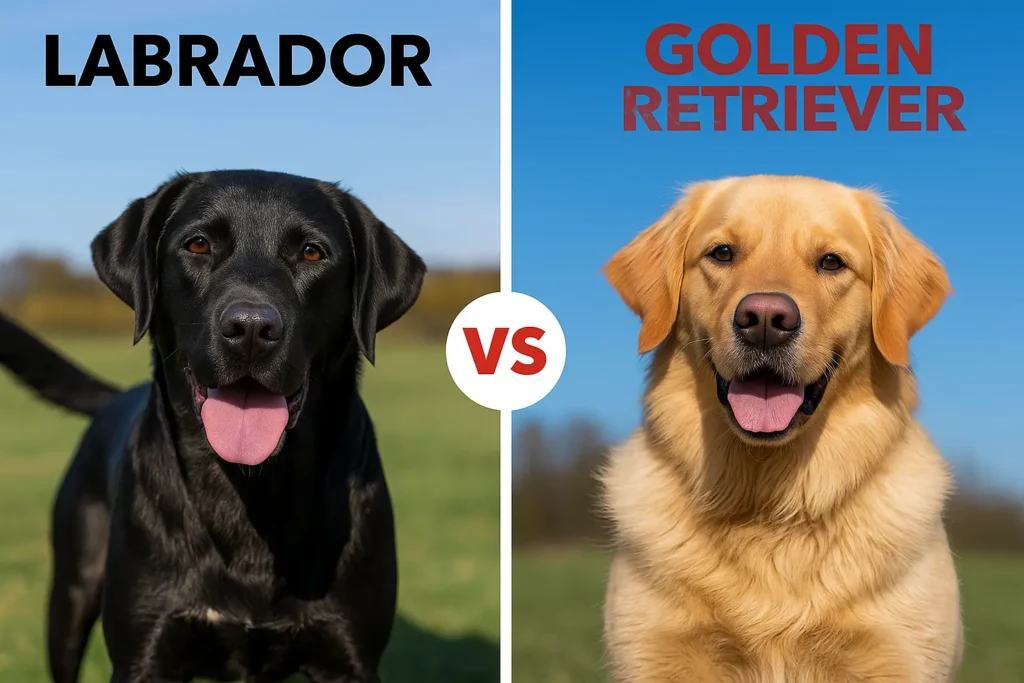
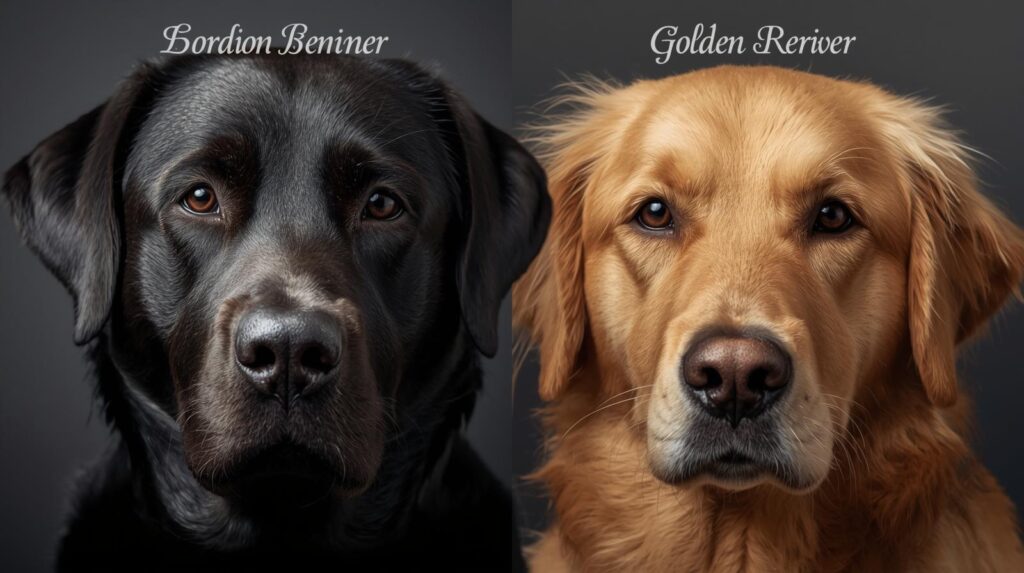
The Golden Retriever vs Labrador Retriever palette differs noticeably. Golden Retrievers come exclusively in warm tones from cream to deep gold, often with reddish undertones. Labs have shorter coats and come in yellow, black, or chocolate, with the AKC recognizing only these three traditional colors.
This means if you’ve seen a black-coated retriever, it’s definitely a Labrador, not a Golden. This simple distinction helps settle many misidentifications in the Labrador vs Golden Retriever debate.
Facial Structure
Subtle facial differences mark the Labrador vs Golden Retriever breeds. Golden Retrievers have slightly longer muzzles and longer ears than Labs, while Labs have broader, heavier heads. These nuances might seem minor, but they contribute to each breed’s distinctive personality expression.
Temperament and Personality: Finding Your Match
Trainability and Intelligence
Both breeds excel intellectually, but the Labrador Retriever vs Golden Retriever approach to learning differs subtly. According to breed experts, Goldens love repetition in training, while Labradors don’t. Additionally, it’s easier for the public to deal with an untrained Golden Retriever than an untrained Labrador Retriever.
This distinction matters for first-time dog owners. Labs require firmer, more consistent training from day one, while Goldens’ naturally compliant nature provides more forgiveness during the learning process.
Activity Levels and Personality
The Labrador vs Golden Retriever energy comparison reveals an interesting contrast. Labs generally have a higher activity level, while Goldens have a more moderate activity level and can be couch potato-like at times.
Breed experts describe Labradors as the “Peter Pan” of retrievers resilient, confident, and joyful dogs who see the fun in every situation. Golden Retrievers, while also loving fun, tend to consider all angles before charging into new situations with gusto.
This personality difference shapes how these dogs interact with their environment. A Lab might see a surprise occurrence as an adventure; a Golden might assess the situation first. Neither approach is superior it simply depends on your preferences.
Emotional Connection and Sensitivity
The Labrador vs Golden Retriever emotional profiles warrant careful consideration. Golden Retrievers are described as clingy compared to Labradors, and breed experts note that Goldens tend to be more sensitive overall.
If you work long hours or travel frequently, the Labrador vs Golden Retriever comparison suggests Labs handle independence better than their Golden counterparts. However, neither breed thrives when left alone for extended periods.
Service Dog Capabilities
Professional working roles highlight how the Labrador vs Golden Retriever traits manifest practically. Labs often excel at police work and service roles like search-and-rescue, while Goldens thrive doing therapy and service work. Their differences in sensitivity and temperament make them suited to different professional environments.
Health Considerations: Living a Long, Healthy Life
Lifespan Expectations
Longevity differs between the breeds in the Labrador vs Golden Retriever comparison. Golden Retrievers live 10 to 12 years, while Labs live 11 to 13 years.
Common Health Concerns
Both breeds share certain genetic predispositions. Labradors and Golden Retrievers are both susceptible to hip and elbow dysplasia and progressive retinal atrophy (gradual vision loss). Both breeds are prone to obesity and arthritis, making consistent diet and exercise crucial to prevent excessive weight gain and reduce stress on joints.
Breed-specific health issues add another layer to the Labrador vs Golden Retriever comparison. Labs face higher risks of elbow dysplasia and laryngeal paralysis (an illness affecting older labs that partially paralyzes the voice box), while Golden Retrievers experience higher rates of cancer compared to Labs.
Weight Management
Labradors are more prone to weight gain, so portion control is crucial. If obesity runs in your family or you lead a sedentary lifestyle, the Labrador vs Golden Retriever comparison suggests careful monitoring with a Lab.
Exercise and Activity Requirements

Daily Exercise Needs
Both the Labrador Retriever vs Golden Retriever breeds demand substantial physical activity. These aren’t apartment dogs for couch-bound owners. Both require long walks, swimming opportunities, and mental stimulation through training and play.
Both breeds are among the most active dog breeds, needing a lot of exercise, making them best suited for owners with active lifestyles.
Mental Stimulation
The Labrador vs Golden Retriever comparison reveals equally intelligent dogs who need more than just physical exercise. Without adequate mental challenges, both breeds become destructive, using their energy to chew shoes, dig holes, or create household chaos.
Grooming and Maintenance: Time and Commitment
Brushing Frequency
The Labrador vs Golden Retriever grooming reality differs considerably. While both breeds benefit from normal weekly brushing as a must, with increased frequency during peak shedding seasons like seasonal changes, Goldens require notably more attention.
Bathing and Ear Care
Both retrievers need routine bathing, ear cleaning (given their floppy ears and water affinity), nail trimming, and dental hygiene. These similarities in the Labrador vs Golden Retriever care profile mean that choosing either breed requires commitment to maintenance.
Cost Considerations: Puppy Prices
Initial Investment
When comparing Labrador vs Golden Retriever costs, there are some modest differences to consider. On average:
- Golden Retriever puppies: $800–$1,200
- Labrador Retriever puppies: $900–$1,500
Prices vary widely depending on breeder reputation, health screenings, and pedigree. Puppies from champion bloodlines or reputable breeders may cost more but often come with verified health guarantees.
Budget-Friendly Alternatives:
For those looking to save, rescue adoption is an excellent option. Many Golden and Labrador Retrievers are available in shelters or breed-specific rescues, often at a fraction of the price of a breeder puppy, and they typically come spayed/neutered and vaccinated.
Which Breed Is Right for You? Making the Decision
Choose a Golden Retriever if you:
- Want a more emotionally sensitive, intuitive companion
- Appreciate a dog that thrives on routine, closeness, and cuddles
- Are prepared for regular, intensive grooming (3–4 times weekly)
- Prefer a slightly calmer, more thoughtful personality
- Value a dog that responds well to repetitive training methods
- Have time for daily brushing sessions
Choose a Labrador Retriever if you:
- Want a slightly more independent, outdoorsy companion
- Prefer a dog with higher energy and more playful enthusiasm
- Appreciate easier maintenance with less frequent brushing
- Value a dog that enjoys adventure and spontaneity
- Work in active, dynamic environments
- Are comfortable with a dog prone to higher activity levels
Popular Myths About Labrador vs Golden Retriever
Myth 1: They’re the Same Breed
Fact: The Labrador vs Golden Retriever comparison reveals distinct breeds with different origins, temperaments, and traits. They’re separate breeds that happen to share retrieving heritage.
Myth 2: A Yellow Lab is the Same as a Golden
Fact: While both can appear golden-colored, they’re genetically and physically distinct. The Labrador Retriever vs Golden Retriever distinction holds regardless of coat color.
Myth 3: Goldens Shed Less
Fact: Both shed considerably. In the Labrador vs Golden Retriever shedding comparison, Goldens might shed more frequently but not necessarily more total volume.
Myth 4: Labs Are Better Service Dogs
Fact: The Labrador vs Golden Retriever professional comparison shows each breed excels in different roles. Labs suit police work; Goldens excel at therapy.
Real-World Experiences: What Owners Say
As someone who’s observed countless retriever owners interact with their companions, I’ve noticed the Labrador vs Golden Retriever reality often surprises new owners. The enthusiastic Lab who nearly knocks you over at the dog park differs fundamentally from the gentle Golden that settles into your lap.
One owner told me, “I chose a Lab thinking the high energy would match mine, but I underestimated how much training consistency they require. With a Golden, I might have had an easier first year.” This perspective highlights why researching the Labrador vs Golden Retriever distinction matters expectations shape satisfaction.
Frequently Asked Questions
What’s the easiest way to tell a Labrador and Golden Retriever apart?
The simplest distinction is coat and color. Golden Retrievers have long, flowing golden coats, while Labradors have short, dense coats in black, yellow, or chocolate. Labs also tend to have broader heads and narrower muzzles, making them physically distinct from Goldens.
Are Golden Retrievers calmer than Labradors?
Generally, Golden Retrievers have a more moderate activity level and can be less impulsive, while Labradors are higher-energy and more spontaneous. Individual personalities vary, so consider visiting both breeds to see which fits your lifestyle.
Which breed requires less grooming?
Golden Retrievers need brushing 3–4 times per week, while Labradors require only 1–2 times per week, making Labs lower-maintenance. Both breeds benefit from regular ear checks, nail trims, and dental care.
Can Labradors and Golden Retrievers live together?
Yes! Both breeds are social and friendly, making them excellent companions for multi-dog households. Compatibility depends on individual temperament, so proper introductions are important.
How do I choose between these breeds for a family with young children?
Both breeds excel with children. Goldens are slightly more sensitive and gentle, ideal for families seeking a calm companion. Labradors are resilient and energetic, handling the chaos of active kids well. Visiting local shelters to observe personalities can help you make the best choice..