
Toller Dog vs Golden Retriever: An Honest Comparison

Standing at the dog park, I once watched a compact, fox-red dog spin in tight circles chasing a tennis ball while a much bigger, honey-coated dog ambled over just to say hello. A stranger asked me, “Is that a small Golden Retriever?” That question is exactly why the Toller Dog vs Golden Retriever comparison keeps coming up in search results, group chats, and vet waiting rooms. Both dogs wear a coat that can look almost identical from a distance, both come from the retriever family, and both were bred to work alongside hunters near water. But once you live with either one, the differences become impossible to ignore.
This guide breaks down the Toller Dog vs Golden Retriever debate using current registration data, cost figures, and breed-club health statistics, so you can decide which dog actually fits your household not just which one photographs better.
What Is a Toller Dog, Exactly?
Before diving deeper into the Toller Dog vs Golden Retriever comparison, it helps to know where the Toller actually comes from. The Nova Scotia Duck Tolling Retriever, nicknamed the “Toller,” is the smallest of the four retriever breeds recognized by the American Kennel Club. The breed was developed along Nova Scotia’s Yarmouth County coastline, where fishermen needed a dog that could lure curious ducks within gunshot range by playing and romping at the water’s edge a hunting technique called “tolling.” Tollers love doing things alongside their owners, which makes them strong candidates for dog sports like agility, flyball, and field trials.
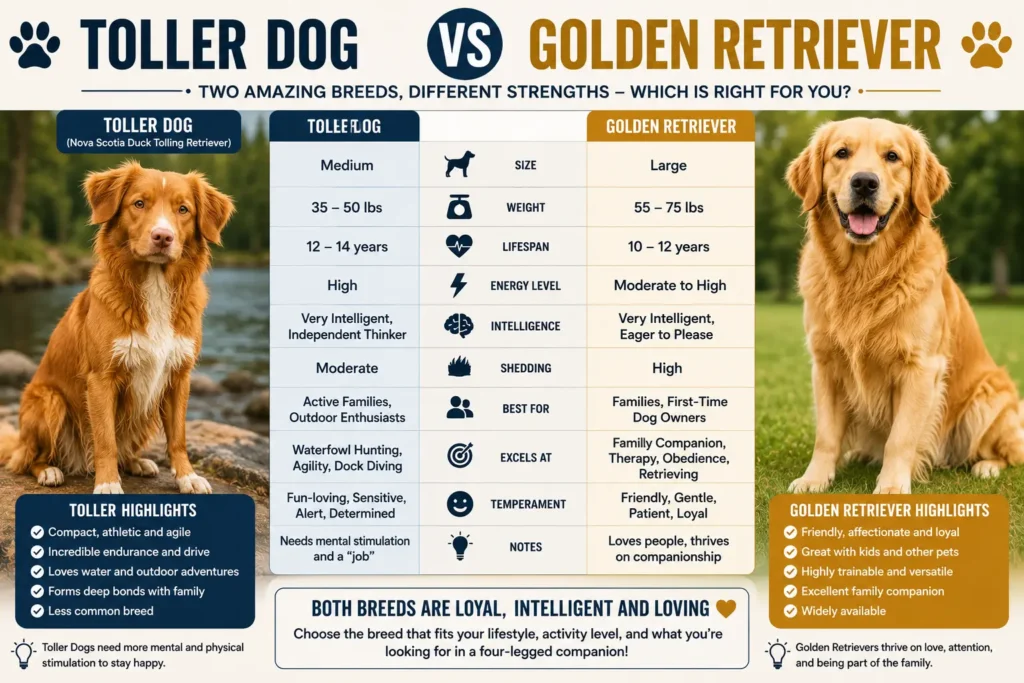
In a Toller Dog vs Golden Retriever side-by-side, the Toller is noticeably smaller and more compact, with males standing between 18 and 21 inches at the shoulder and generally weighing 35 to 50 pounds. Their coat ranges from golden-red to deep copper, and many owners describe their personality as a blend of retriever devotion with a touch of terrier mischief.
What Makes the Golden Retriever So Popular?
No Toller Dog vs Golden Retriever discussion is complete without acknowledging why the Golden dominates so many “best family dog” lists. The Golden Retriever needs almost no introduction. The AKC‘s most recent annual registration rankings place the Golden Retriever at the No. 3 most popular dog breed in the United States, trailing only the French Bulldog and Labrador Retriever. That popularity isn’t new Goldens have been a top-five staple for decades thanks to their easygoing nature and photogenic good looks.
Where the Toller Dog vs Golden Retriever comparison really splits is scale and temperament. Golden Retrievers typically stand 21.5 to 24 inches tall and weigh 55 to 75 pounds, making them a true medium-to-large breed rather than the Toller’s compact frame. Goldens are famous for being outgoing with everyone they meet, from the mail carrier to a stranger at the vet’s office, which is a big part of why families gravitate toward them.
Toller Dog vs Golden Retriever: Temperament Breakdown
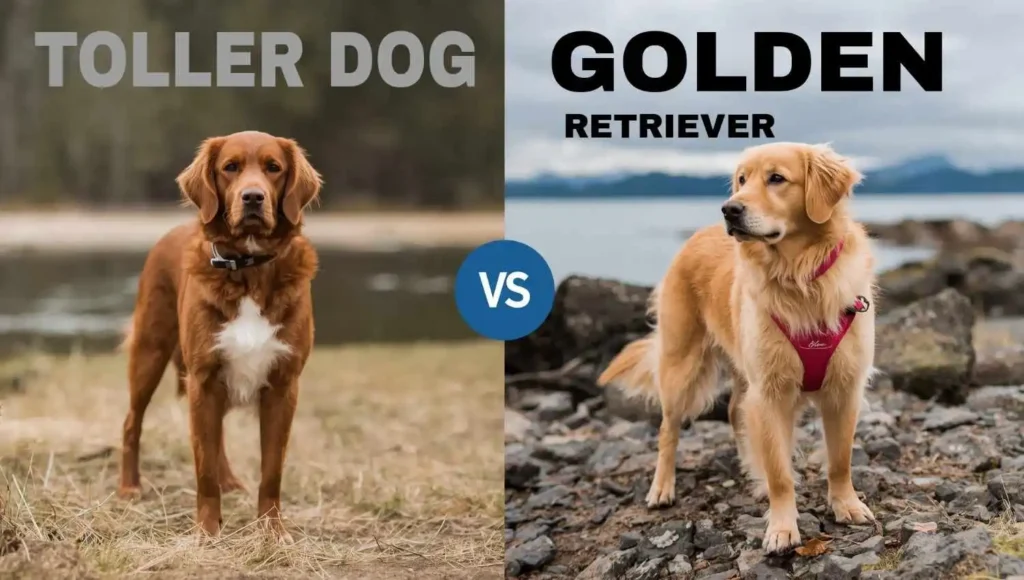
Anyone researching Toller Dog vs Golden Retriever behavior should know this upfront: both breeds are intelligent and eager to please, but they express affection very differently.
Tollers just don’t have the same outgoing, goofy personality that characterizes Golden Retrievers, and they possess a natural reserve toward strangers, warming up gradually rather than greeting every visitor like a long-lost friend. Golden Retrievers, by contrast, tend to treat nearly everyone as a potential best friend from the first meeting. In my own experience helping friends choose between the two, the families who wanted a dog that would happily nap through a dinner party leaned Golden, while the families who wanted a high-drive training partner leaned Toller.
The AKC rates Tollers a five out of five for patience and friendliness with children and a four out of five for their interactions with other dogs, though they can be slightly wary of strangers and new situations before warming up. Golden Retrievers generally score just as high with kids but rarely show that same initial wariness toward new people.
Energy Levels and Exercise Needs
If you’re weighing Toller Dog vs Golden Retriever energy demands, plan for both breeds to need serious daily exercise this is not a “walk around the block” situation for either one. Tollers were bred to work tirelessly at the water’s edge and can develop the well-known “Toller scream,” a high-pitched vocalization that shows up when they’re excited or under-exercised. Golden Retrievers are more likely to self-regulate their energy as they mature, though puppies and young adults still need an hour or more of activity daily.
Size, Lifespan, and Cost Compared
Numbers tell part of the Toller Dog vs Golden Retriever story that temperament alone can’t capture. Here’s how the two breeds stack up on the practical, budget-relevant details.
| Category | Toller Dog | Golden Retriever |
|---|---|---|
| Height (male) | 18–21 inches | 21.5–24 inches |
| Weight | 35–50 lbs | 55–75 lbs |
| Average lifespan | 10–14 years | 10–12 years |
| Puppy price range | $1,000–$2,500 | $1,000–$3,500 |
| AKC popularity rank | 110th of 155 recognized breeds and varieties | 3rd overall |
| Grooming needs | Moderate, weekly brushing | Moderate-high, frequent brushing |
A quick gut check on cost: a Toller’s total lifetime spend, including purchase price and annual upkeep, commonly lands between $18,000 and $35,000 or more over a 12–14 year lifespan. Golden Retrievers carry comparable ongoing costs given their larger size and higher food and grooming needs, even though their upfront puppy price can be similar to or lower than a Toller’s depending on the breeder and region.
Health Considerations in the Toller Dog vs Golden Retriever Comparison
Health is often the deciding factor once families move past looks and temperament in the Toller Dog vs Golden Retriever conversation. Neither breed is bulletproof when it comes to genetics. Golden Retrievers are widely known to have elevated cancer rates compared to many other breeds, along with a predisposition to hip dysplasia and heart conditions like subvalvular aortic stenosis. Tollers, meanwhile, are prone to autoimmune conditions such as Addison’s disease and immune-mediated rheumatic disease, along with hip and eye issues that reputable breeders screen for before pairing dogs.
If health testing matters to you and it should ask any breeder of either breed for OFA hip, elbow, and cardiac clearances, plus eye certification through CAER. A responsible Toller breeder will also test for Addison’s disease risk markers. This is one area of the Toller Dog vs Golden Retriever discussion where doing your homework upfront can save you years of vet bills later.
Grooming and Shedding: What to Expect at Home
Both breeds carry a water-repellent double coat, so shedding is a fact of life whichever way you lean in the Toller Dog vs Golden Retriever decision. Golden Retrievers tend to shed more heavily overall simply because of their larger surface area and longer feathering on the legs, tail, and chest. Tollers shed noticeably too, especially during seasonal coat blows, but their smaller size means less fur to manage day to day. Weekly brushing is the baseline for both, stepping up to daily during shedding season.
Which One Fits Your Lifestyle?
Choosing between a Toller Dog vs Golden Retriever really comes down to three honest questions: How much space do you have, how much exercise can you realistically provide, and do you want a dog that greets every stranger like a celebrity or one that reserves its enthusiasm for people it already trusts?
If you live in a smaller home, want a dog compact enough to travel easily, and enjoy training-heavy sports like agility or dock diving, the Toller is worth serious consideration. If you want a larger, endlessly social family dog that’s equally happy on a hike or curled up at your feet, the Golden Retriever remains one of the most reliable choices in the entire sporting group. For more breed-specific advice once you’ve made your pick, our Golden Retriever Guides hub covers everything from puppy-proofing to nutrition.
Frequently Asked Questions
Is a Toller Basically a Small Golden Retriever?
No. Although they look similar, the Nova Scotia Duck Tolling Retriever (Toller) and the Golden Retriever are two distinct breeds with different histories, personalities, and activity levels. Their similar coat color often causes confusion, but they are not closely related breeds.
Which Is Better for a First-Time Dog Owner, a Toller or a Golden Retriever?
For most first-time owners, the Golden Retriever is the better choice. Golden Retrievers are known for their friendly, patient, and eager-to-please nature, making training easier. Tollers are highly intelligent but require more mental stimulation, exercise, and experienced handling.
Do Tollers Bark More Than Golden Retrievers?
Yes. Tollers are famous for their unique high-pitched “Toller scream,” especially when excited during play or retrieving activities. Golden Retrievers are generally quieter and less vocal, although they may bark to alert their owners.
Are Tollers Hypoallergenic Like Some People Assume?
No. Neither the Toller nor the Golden Retriever is hypoallergenic. Both breeds shed throughout the year and require regular brushing to help control loose hair and maintain a healthy coat.
Which Breed Lives Longer, on Average?
Nova Scotia Duck Tolling Retrievers generally have a slightly longer lifespan, averaging 10 to 14 years, while Golden Retrievers typically live 10 to 12 years. Lifespan varies depending on genetics, diet, exercise, and overall healthcare.